- One issue online retailers never stop talking about is uncollected parcels: orders that we dispatch to customers who, for one reason or another, decide not to accept or collect them.
Drawing on our experience of more than 320,000 parcels dispatched worldwide through our online retail operations — including 27,000 uncollected parcels — we will try to answer the following questions:
- What percentage of dispatched parcels should you expect to go uncollected?
- Why don't customers collect orders they placed themselves?
- How can you prevent, or at least reduce, the number of uncollected parcels?
- What should you do with customers who keep ordering but never collect their parcels?
- Can you charge the customer for the cost of an uncollected parcel?
- Is simply removing cash on delivery the best solution?
- Two special tactics you may not have thought about!
What percentage of parcels should you expect to go uncollected?
The rate of uncollected parcels depends heavily on the destination country, payment method, type of product, how customers are notified and the delivery provider.
The following rules generally apply in the markets we have worked with:
- In markets where e-commerce is less developed, a higher share of parcels may go uncollected; in more mature markets the share is often lower. One reason is that customers in more established e-commerce markets are less likely to use cash on delivery (COD), which has a particularly strong effect on non-collection. In our experience, Romania and Italy have been among the EU markets with higher rates, with some retailers reporting 30–40%. At the other end are countries where most online orders are prepaid and COD is uncommon, such as Germany, where we have seen uncollected rates of around 1–2%.
- Most uncollected parcels arise from COD orders. A customer who has not paid in advance may feel there is little financial consequence to refusing delivery. By contrast, people who pay in advance tend to be more accustomed to online shopping and to know what will happen after placing the order.
- The rate also depends on the product category. Lower-value impulse purchases are often among the most frequently refused orders, while more expensive necessities — washing machines and dishwashers, for example — may be collected more reliably. It also depends on the kind of web shop you run. Stores targeting impulse buyers often focus on getting as many orders as possible completed quickly. Customers may then forget they placed an order or not understand when and how it will arrive. Online retail is a business: if you want to manage it wisely, let evidence and analysis guide your decisions rather than your emotions. Do not remove COD merely because it “feels right”; test what you might lose by doing so.
Active customer communication is essential
- The more useful notifications a customer receives about an order, the lower the likelihood of non-collection. The delivery provider matters from the first step: does it send an SMS or email the day before delivery and on the day itself? Does it provide a delivery window? And how accurate is that window? A precise one- or two-hour slot gives customers a much better chance to accept a parcel than a vague eight-hour window that requires them to stay in one place all day.
- Collection rates are also affected by whether the driver actually phones the customer when arriving or simply rings the doorbell. Retailers can go a step further by sending their own order updates in addition to the carrier's messages. Tell customers when their parcel was packed, provide the tracking number and link, keep them informed about the expected delivery date and offer assistance if a first delivery attempt fails.
The quality of delivery companies
- Some carriers consistently have higher non-collection rates because they divert parcels to post offices, parcel shops or lockers rather than attempting delivery at the customer's chosen address. Before choosing a carrier, establish whether the driver can do that without the customer's prior agreement. Be cautious even if the carrier claims this is a great convenience. Parcel shops and lockers are excellent for customers who actively choose them, but someone who paid for home delivery may not collect a parcel left several kilometres away.
- As a rough working expectation in the markets discussed, an uncollected rate of 5–15% has often been observed, depending on the factors above. Below 5% there is usually little reason for alarm. Above 15%, there may be substantial room for improvement.
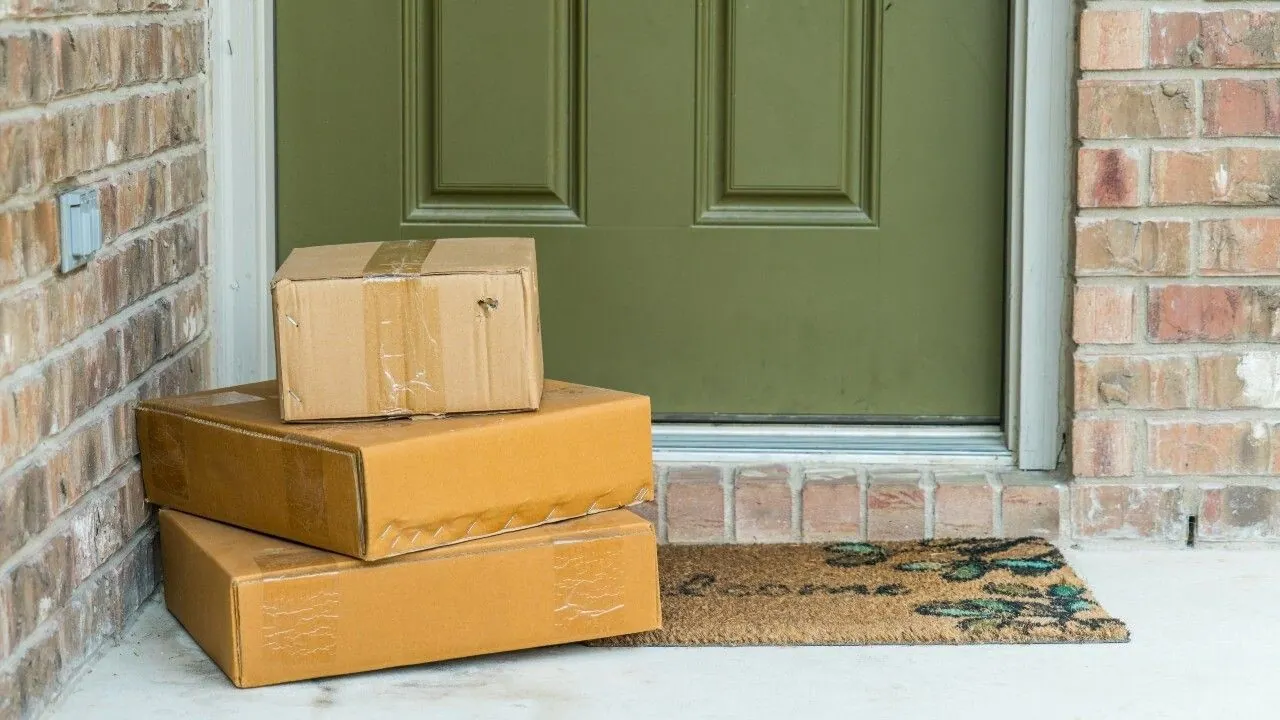
Why don't customers collect their parcels?
While working with the Warehouse.si fulfilment centre, we sometimes called customers in higher non-collection markets and asked why they had not accepted their orders. Most answers fell into one of the following categories:
- The driver did not call the customer and simply recorded that nobody was at the address.
- The driver could not find the address or doorbell and marked the address as incorrect.
- The customer changed their mind — perhaps they ran out of money or read something online that persuaded them the product was not suitable.
- The customer found the same product at a lower price elsewhere and decided not to accept the first, more expensive order.
- The parcel was left at a locker, parcel shop or post office, but the customer had ordered delivery to their own address and did not want to collect it elsewhere.
- During checkout, the customer failed to notice other charges — delivery fees, parcel insurance and so on — and refused to pay the total amount on arrival.
We noticed that responsibility was often shared between the courier and the buyer. Problems were common when neither side was prepared to be flexible: a driver might refuse to enter an apartment building and demand that the customer come out to the road, while the customer refused and the parcel was returned.
Investigating every incident is time-consuming, and not every customer wants to admit they made a mistake, so the answers can be unreliable. We recommend investigating individual causes mainly when your non-collection rate is exceptionally high and you suspect that carrier performance is responsible. You cannot realistically change every customer's habits.

How can you prevent or reduce uncollected parcels?
- Use as many useful customer notifications as possible: SMS, email, Viber and a phone call before delivery. Each additional well-timed message can reduce the risk of a missed collection.
- Dispatch every day. If you cannot maintain daily dispatch, consider a fulfilment centre such as Warehouse.si to pack and send parcels every working day regardless of your own location. In our experience, each unnecessary day of delay increases the likelihood of an order going uncollected.
- Do not select a carrier on its base price alone. Ask retailers in the same sector and destination market about their non-collection rates with different providers, and factor those rates into your comparison.
The calculation is relatively simple:
Suppose you ship 100 parcels a day with an average order value of €30. You can choose Carrier A, charging €3 per parcel with a 10% uncollected rate, or Carrier B, charging €4 per parcel with only 5% uncollected.
Monthly volume: 3,000 parcels.
Carrier A monthly shipping cost: 3,000 × €3 + 300 returned parcels × €3 = €9,900.
Carrier A monthly sales from collected orders: 2,700 × €30 = €81,000.
Carrier B monthly shipping cost: 3,000 × €4 + 150 returned parcels × €4 = €12,600.
Carrier B monthly sales from collected orders: 2,850 × €30 = €85,500.
In this theoretical example, Carrier B can be the better choice despite its much higher price of €4 instead of €3 per parcel, particularly for products with healthy margins. The smaller number of failed deliveries can more than compensate for the increased carrier charge. You may also benefit from better service, happier customers, fewer complaints and fewer negative reviews.
What should you do with customers who repeatedly order but never collect?
We have some disappointing news: data-protection rules, including the GDPR, make it problematic for retailers to compile and share lists of supposedly “bad customers” with other businesses. But you can consider proportionate rules within your own ordering process, subject to having a lawful basis and transparent privacy information. For example:
- Allow the first uncollected parcel without restricting the customer's payment methods.
- After a second failed collection, you might offer the customer only prepaid methods — card, PayPal or bank transfer — rather than COD. To minimise manual work, an order system can be designed to flag repeated failed deliveries by email address or phone number and send an explanation with alternative payment options. Any such processing must comply with data-protection and consumer rules.
- If you have only a small customer base, you can deal with these cases personally. Speak with the customer and decide whether the explanation for earlier failed deliveries is reasonable before changing the payment options you offer them.

Can you charge customers for uncollected parcels?
As a general rule, charging a “penalty” for an uncollected consumer parcel is legally sensitive and may attract scrutiny from consumer-protection authorities. You could consider clauses dealing with deliberate costs caused by customers, but first ask yourself the following questions:
- How would you explain to a consumer inspector that refusing a parcel was not an attempt by the customer to exercise the right to withdraw from a distance contract within 14 days? Inspectors we spoke with generally interpreted non-collection as a sign that the customer no longer wanted the order.
- How would you actually collect the €5–€10 you believe the customer owes after refusing a COD parcel? Would you sue? Probably not.
- How much is your time worth? How long would you spend arguing, sending payment requests and trying to persuade someone to cover a return charge — potentially without getting paid, because you have little practical leverage?
We know how frustrating these customers can be. You spent time and care preparing the goods and the parcel, only to see it returned. Sometimes their attitude may even be insulting. But this is part of the business. Rather than arguing, develop a process that takes as little time as possible and reduces the chance of repeat losses. Prolonged confrontation may simply lead to further trouble, including hostile public reviews.
It usually isn't worth it.

Is removing cash on delivery (COD) the best solution?
In the markets we are discussing, we consider a blanket removal of COD one of the worst ways to deal with this problem. Let's take our own local market as an example.
Removing COD in a country where surveys and our experience indicate that 60–70% of buyers want it available could severely hurt sales. You might save tens or hundreds of euros in returned-parcel charges while losing 30–50% of your turnover.
You need to accept that your products are probably not so unique or indispensable that every customer who prefers COD will suddenly switch to a bank card just because you have removed their preferred payment option.
We also frequently hear: “We removed COD and still sell as much as before, so it made no difference.” That conclusion may be wrong because it is not based on a proper comparison over the same period. Without a controlled test — for example, sending half your visitors to a shop with COD and half to an otherwise identical shop without it — you cannot account for all the other factors that affect sales.
If you removed COD and still sell 50 parcels a day, as you did two years earlier, you may be overlooking the possibility that you could now be selling twice as many if COD were still offered.
“We removed cash on delivery because we were fed up with customers who didn't collect their parcels.”
Think about it: perhaps only 1–10% of customers behave that way, but the change could annoy a much larger group — possibly 60% of shoppers who want COD as an available option. Is that really a sensible business decision?
Do not eliminate COD solely because 5–10% of orders go uncollected, if the rate is even that high. Look at the figures calmly. Calculate what those orders really cost you, how much management time they consume and what you could lose from a 20% fall in sales if you remove COD in frustration.
Some straightforward arithmetic
For readers who do not enjoy maths or statistics, here is another simple illustration, deliberately ignoring other variables that are not necessary to show the principle:
A retailer sells 30 parcels a day, has a 10% non-collection rate, and an average basket value of €30. Postage costs €4 per parcel.
Under those assumptions, the monthly outcome is (30 parcels a day × 30 days × €30) − (90 returned parcels × €4 return cost) − (90 returned parcels × €30 order value) = €27,000 − €360 − €2,700 = €23,940.
Now suppose the retailer removes COD, reducing uncollected parcels to zero, but loses only 20% of customers as a consequence. That would be a relatively favourable outcome given the assumed COD preference of 60–70%. The sales result would then be:
€27,000 − €5,400 (20%) = €21,600.
Even in that optimistic scenario, the retailer has made themselves more than €2,000 worse off per month — around €24,000 per year — merely by removing COD, despite eliminating failed collections. You can work out how much worse it might be if 30–50% of customers stop buying.

Two special tactics you may not have considered
Here are two practical negotiating and checkout tactics that might help you worry less about uncollected parcels.
Tactic 1
Carriers know that uncollected parcels are a problem. During negotiations about shipping conditions (see our guide to negotiating carrier rates), they often claim to be the best at avoiding failed deliveries. Use that moment to negotiate a clause under which the carrier returns uncollected parcels free of charge. It is a reasonable argument: if they have just assured you that failures will be very rare, the clause should not create a major expense for them.
If they refuse, offer an acceptable threshold — perhaps 3% — and ask them not to charge return fees for the portion above it. We have reached such agreements with selected carriers ourselves. At the very least, the response will tell you whether the salesperson believes their own claims about exceptionally low non-collection rates.
Tactic 2
Instead of eliminating COD completely, you can try a gentler approach that reduces its share of orders. More retailers are introducing a €1–€2 surcharge for COD payments. COD remains available, but customers who do not care strongly about that payment method may choose one that works better for you. Those who still prefer COD can pay the extra charge. The fee increases your margin and may help offset returned parcels and any customers who decide not to buy. Before introducing such a charge, check the consumer and payment rules applicable in your market.
You must test this too. Ideally, run an A/B experiment: send 50% of visitors to your existing shop with no COD surcharge, and 50% to an otherwise identical version that charges extra for COD. Track the payment method selected, the conversion rate and the net contribution. Calculate how much extra revenue the surcharge creates — and how much you may lose if conversions fall.
Conclusion
When you think about uncollected parcels, keep a sense of proportion. Every retailer deals with them. If your rate is around 5–15%, that was broadly in line with many of the businesses we observed; below 5% was an especially good result. Use the steps above to improve your rate, but do not obsess over reaching 0%. Returns and non-collection are part of e-commerce, and the associated costs should be reflected in your margins.
If you have any questions about this topic — or need help with fulfilment, daily dispatch or reducing failed deliveries — please contact us. We would be happy to help.
Damir Vidan
CEO, OnlySales.si