The Warehouse.si fulfilment centre offers its online-retail partners another useful option: their customers can collect orders in person from its Ljubljana location.
Using research conducted by Ceneje.si and Valicon for the detailed E-commerce Report Slovenia, we want to explore a practical question: does it make sense for online shops to offer customer collection, or not?
The research was conducted among randomly selected online shoppers, immediately after they completed a purchase, using CAWI — Computer Assisted Web Interviewing.

E-commerce Report Slovenia
Improving the customer experience
In a constantly evolving e-commerce market, retailers have to keep innovating and finding ways to stand out. One option is customer collection at a store or another busy, conveniently accessible location where many of your buyers already spend time.
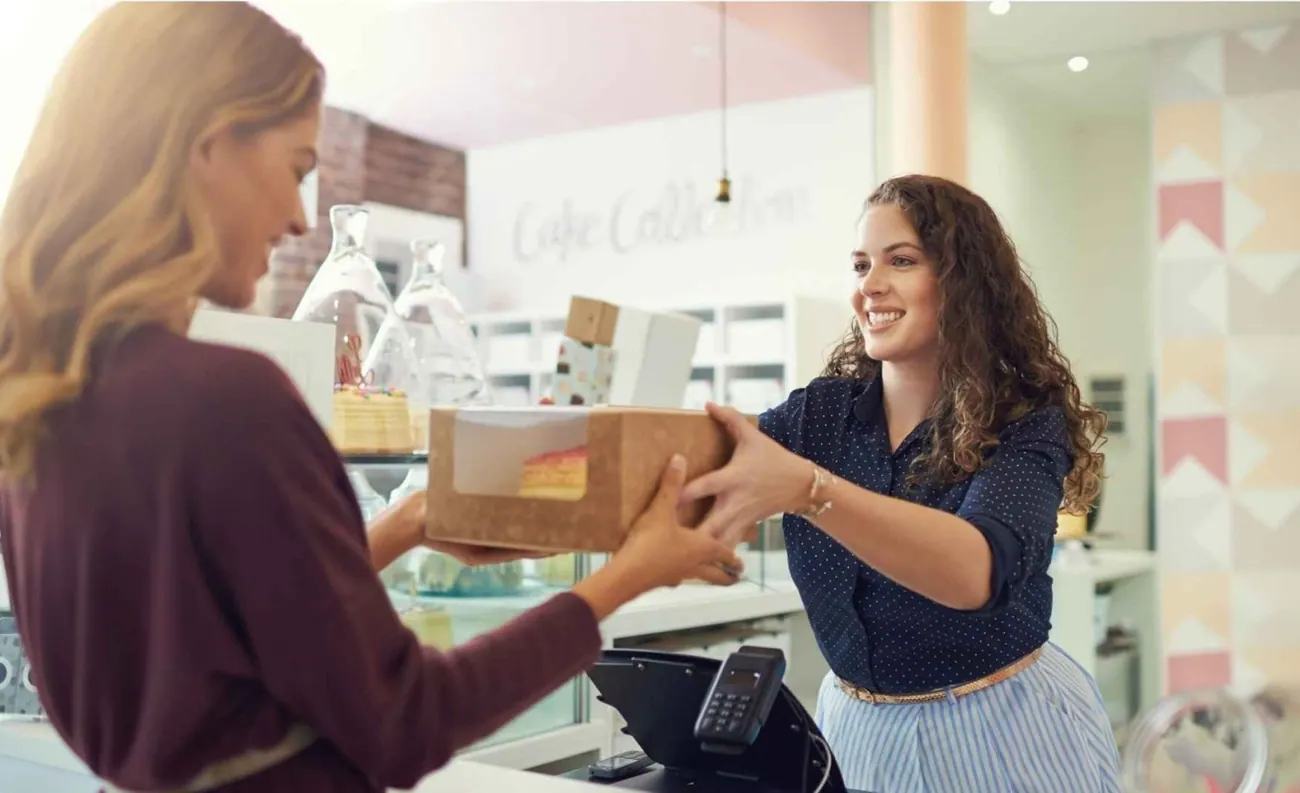
Collection allows customers to order online and pick up their purchases from a physical location whenever it suits them. It removes the wait for a courier, additional delivery costs and the risk of a parcel being lost or damaged in transit. In effect, it combines some of the best aspects of shopping online and shopping in person.
Building stronger customer relationships
Direct interaction can increase customer trust and loyalty — even if the buyer ultimately chooses delivery rather than collection. For a smaller or less familiar retailer, a collection option signals confidence in the quality of its products: customers can come and see what they are buying.
It also reassures customers that the product is actually in stock, rather than merely marked “available” by mistake. Many online shoppers have experienced waiting weeks for an item that a store claimed to have on hand. After several disappointments, they may no longer trust stock indicators in online shops.
Lower costs and higher sales
Introducing collection can reduce costs for both the retailer and the buyer. By avoiding shipping charges, a store can pass on savings to the customer, offer a more economical purchasing experience, or redirect part of the saving towards additional marketing.
Collection may also generate additional sales. When customers visit a pickup point, they are more likely to make an impulse purchase or take an extra unit of the same product. You have probably heard: “Well, since I'm here, make it two.”
Hello, I'd like to place an order, but I need the product today because it's a gift. Is there somewhere in Ljubljana I can pick it up?
Responding to changing consumer behaviour
Collection is a proactive response to changing shopping habits. Today's consumers value convenience, flexibility and speed. They want to shop at their own pace and on their own terms. A pickup service meets those expectations while adding a personal touch that shows your store is attentive and responsive to customer needs.
How long are customers prepared to wait for delivery?
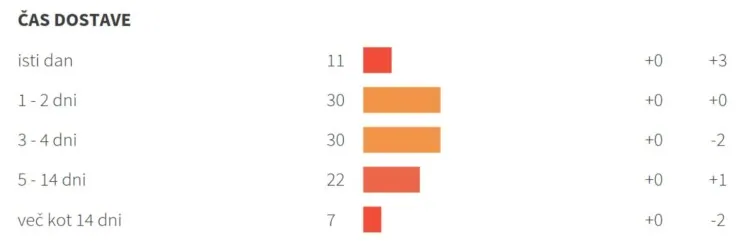
According to the Slovenian e-commerce research mentioned earlier, the results were as follows:
E-commerce Report Slovenia — delivery time
As many as 11% of buyers said they would place an online order only if same-day delivery were available. A further 30% would buy only when convinced their parcel would arrive within one or two days. “Convinced” is the crucial word. You might actually ship every parcel for next-day delivery, but if a customer does not believe it will arrive in time, they may abandon the purchase anyway.
If you cannot meet those expectations, you could therefore be missing out on 11%, or even 41%, of potential sales under the assumptions of this study.
Imagine the impact on your business if one fairly simple improvement — convenient personal collection — helped you increase sales by 10–40% in the scenario explored here.
Which customers are you missing without collection?
Those figures address delivery speed and buyer expectations. We also have information about which fulfilment methods Slovenian shoppers actually chose:

E-commerce Report Slovenia 2022 — delivery method
In addition to traditional delivery by Pošta Slovenije and private couriers, 16% of Slovenian buyers collected their purchase in person in the research. Remember that they could only do so when buying from a store offering that option — and many stores still did not. It is therefore reasonable to expect that the potential demand for collection could be higher if the service were more widely available.
Let's work through a simple hypothetical calculation of what an online shop might be missing by not offering collection:
- Suppose you currently send 10 parcels a day without a pickup option, or approximately 300 parcels a month.
- If personal collection attracts a further 16% of customers (possibly more), the shop might be able to fulfil 350 orders rather than 300 next month — approximately 600 additional orders over a year.
- At a contribution margin of €10 per product, that would represent €6,000 in additional annual profit from offering collection in this illustrative scenario.
The problems with introducing collection — and possible solutions
From conversations with partners who do not currently offer pickup, two obstacles come up repeatedly:
- The retailer is based in a less convenient location, outside the main cities, and customers are unwilling to make a special trip.
- The retailer has too few orders to justify operating its own collection point in a busy location. In Slovenia, this usually means being unable to maintain a pickup point in Ljubljana.
Conclusion — how can we help?
The survey shows that a large number of Slovenian buyers value personal collection. Pickup points also build trust and serve people who want an item today or tomorrow, rather than waiting for home delivery. Taken together, these considerations suggest that offering collection can be a sensible commercial decision for many online stores that do not yet have the option.
Collection is more than an extra delivery choice; it can be a strategic decision that improves the shopping experience, supports operational efficiency and increases sales. It also demonstrates that your business is committed to providing customers with an excellent service.
If you cannot operate a collection point for the reasons above, consider partnering with a fulfilment provider that offers this service in Slovenia. For example, Warehouse.si can manage your inventory while also acting as your Ljubljana customer collection point under an agreed arrangement.